Sustainable packaging has become an important purchasing consideration for fashion brands, retailers, and e-commerce businesses. From the shopping bag customers carry out of a store to the box they receive at home, packaging influences brand perception, shipping efficiency, and the amount of waste generated throughout the product lifecycle.
For fashion businesses, sustainable packaging solutions are not limited to replacing plastic bags with paper. A practical strategy also considers recycled content, material sourcing, packaging dimensions, printing finishes, product protection, and whether the packaging can be reused or recycled after use.
Paper shopping bags, cardboard boxes, kraft paper, and recycled paper packaging are among the options brands can evaluate. This guide explains how these materials work, how to choose the right packaging format, and what fashion brands should discuss with a packaging supplier before placing an order.
What Is Sustainable Packaging for Fashion Brands?
Sustainable fashion packaging refers to packaging designed to reduce unnecessary material use and environmental impact while still protecting products and supporting brand presentation. It considers more than the material itself. Manufacturing processes, transportation, packaging weight, reuse potential, and end-of-life disposal all matter.
For example, a paper shopping bag may be a suitable alternative to a conventional plastic carrier bag, but its overall environmental performance also depends on its paper source, manufacturing process, weight, and how many times it is reused.
Fashion brands should evaluate packaging through several practical criteria:
- Material sourcing: Whether paper comes from responsibly managed forests or contains verified recycled fibers.
- Recyclability: Whether the packaging can be collected and processed through available local recycling systems.
- Material efficiency: Whether the packaging uses an appropriate amount of material without unnecessary layers or oversized dimensions.
- Reusability: Whether customers can reasonably reuse the bag or box after receiving the product.
- Production and logistics: Whether the packaging can be manufactured, stored, and transported efficiently.
Why Sustainable Packaging Matters to Fashion Businesses
Fashion packaging serves two purposes: it protects products and communicates brand identity. For independent clothing labels, boutique retailers, and online fashion stores, packaging is also part of the customer experience.
There is a measurable reason to pay attention to paper packaging infrastructure. According to the American Forest & Paper Association, the United States recycled approximately 46 million tons of paper in 2023. The reported recycling rate was 65%–69% for paper and 71%–76% for cardboard.
These figures show that paper and cardboard have established recovery systems in the US. However, actual recycling depends on local collection facilities, material contamination, and packaging construction. A paper package with incompatible plastic laminates or other mixed materials may be more difficult to process.
For fashion brands selling internationally, packaging decisions also need to consider changing regulations. The European Union's Packaging and Packaging Waste Regulation (EU) 2025/40 began applying on August 12, 2026. It introduces a broader framework covering packaging design, waste prevention, recyclability, and reuse.
Brands exporting to Europe should review the regulation and assess packaging requirements with their importers and compliance partners rather than assuming that every paper-based package automatically meets EU requirements.
Paper Bags: A Practical Choice for Fashion Retail Packaging
Paper shopping bags are widely used by clothing stores, footwear retailers, accessories brands, and gift shops. They offer a familiar retail packaging format and provide a printable surface for logos, brand colors, and promotional messages.
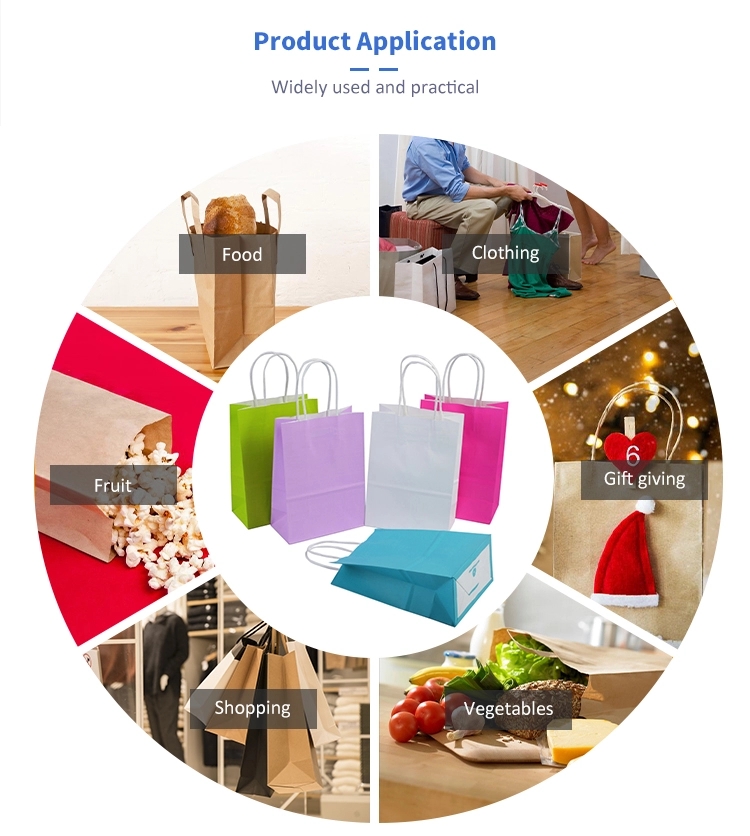
Paper shopping bag applications for retail, clothing, and gift packaging.
For fashion businesses, kraft paper is particularly useful when a natural and understated appearance fits the brand identity. White kraft and coated paper can also support more colorful or premium visual designs.
HOMER offers customized paper bag options using materials such as kraft paper, coated paper, and art paper. Its product range includes different sizes, colors, handle styles, and printing options to accommodate different brand requirements.
Brands can explore custom paper merchandise bags for retail packaging or review the brown kraft paper bag with handles as an example of a kraft-based packaging format.
How to Choose the Right Paper Bag Material
Not all paper bags offer the same performance. Paper weight, fiber quality, surface treatment, and handle construction affect durability and appearance.
| Paper Material | Main Characteristics | Typical Fashion Applications |
|---|---|---|
| Brown Kraft Paper | Natural appearance, practical strength, suitable for simple printing | Everyday clothing bags, casualwear, footwear |
| White Kraft Paper | Clean appearance, suitable for light-colored branding and printing | Boutique retail, minimalist fashion brands |
| Coated Paper | Smoother surface and stronger color reproduction | Branded shopping bags and promotional packaging |
| Art Paper | Suitable for detailed graphics and premium visual presentation | Gift packaging and higher-end retail collections |
When choosing a paper bag, brands should also consider the weight of the products being carried. A bag designed for lightweight T-shirts may not be suitable for heavy footwear or multiple garments.
Handle attachment, bottom reinforcement, paper thickness, and bag dimensions should be tested with the actual products before mass production.
Paper Boxes: Balancing Product Protection and Brand Presentation
Paper boxes are another important part of sustainable fashion packaging. They are commonly used for shoes, clothing sets, accessories, gift collections, and e-commerce orders.
Compared with shopping bags, boxes provide more structural protection and can help products maintain their shape during storage and transportation. However, the right construction depends on the product and the distribution process.
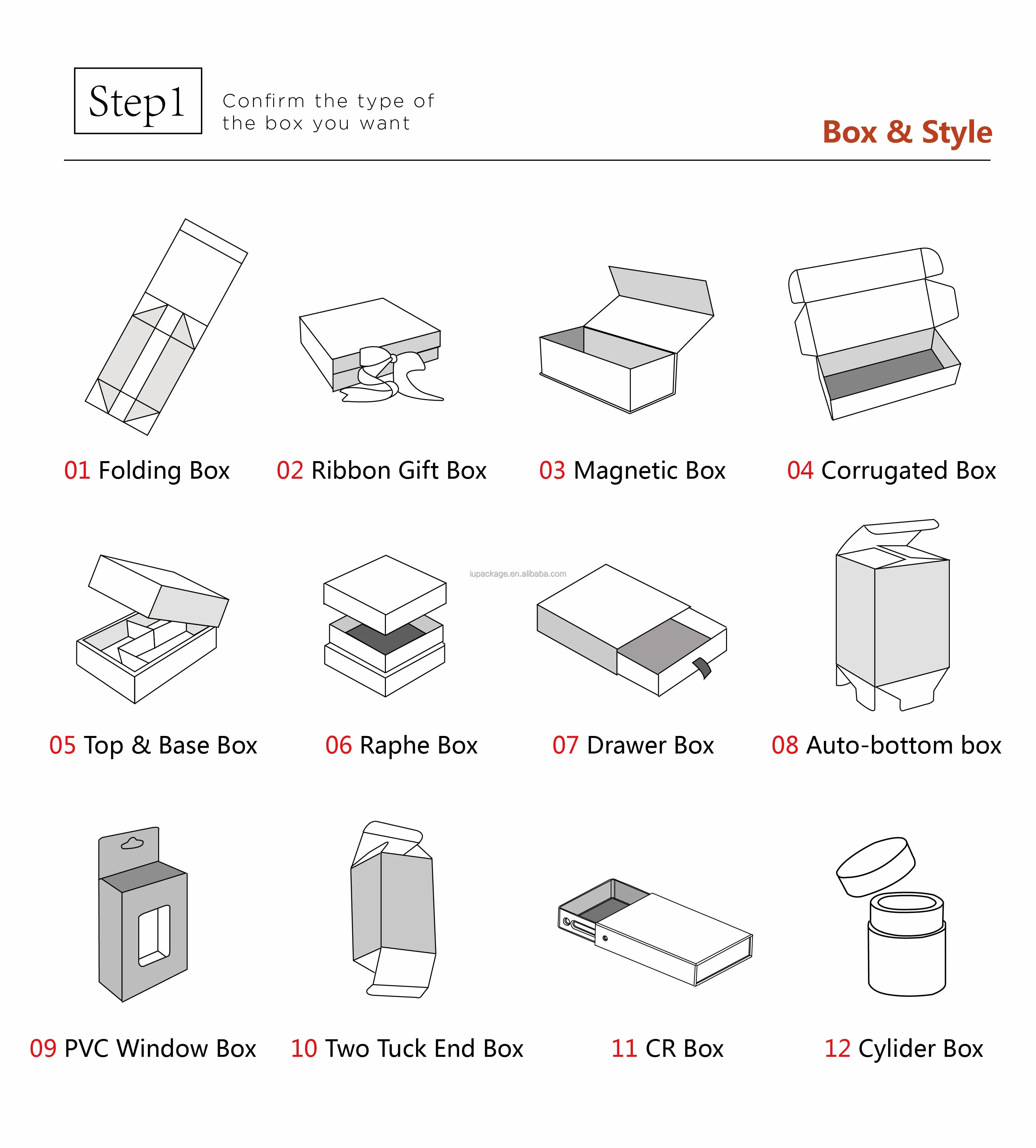
Common paper box structures for customized product packaging.
HOMER's paper box range includes different packaging structures, such as drawer boxes, cylindrical boxes, gift boxes, and other customized cardboard packaging formats.
For fashion brands, custom paper boxes can be developed for different product categories and presentation requirements. For example, full-color printed shoe boxes are suitable for footwear packaging, gift presentation, and product storage.
Folding Cartons, Rigid Boxes, and Corrugated Boxes: What Is the Difference?
Choosing a box structure is not only a design decision. It affects material consumption, shipping protection, storage requirements, and packaging costs.
| Box Type | Construction | Best-Suited Applications |
|---|---|---|
| Folding Carton | Foldable paperboard structure | Lightweight apparel, accessories, retail packaging |
| Rigid Gift Box | Thicker, non-collapsible board structure | Premium gifts, luxury accessories, presentation sets |
| Corrugated Box | Fluted paper layer between linerboards | E-commerce shipping, footwear, heavier products |
| Drawer Box | Sliding inner tray and outer sleeve | Gift sets, accessories, premium product presentation |
For direct-to-consumer fashion brands, corrugated boxes are often worth considering for shipping because their layered construction provides cushioning and stacking strength. Folding cartons may be more appropriate as inner retail packaging, while rigid boxes are generally selected when presentation is a priority.
One practical approach is to use a lightweight branded paper box inside a correctly sized corrugated shipping carton. This separates the presentation function from the transportation protection requirement.
Eco-Friendly Materials Fashion Brands Should Consider
Paper packaging is only one part of a broader material strategy. Brands should understand the differences between recycled paper, virgin fiber paper, and specialty materials before making environmental claims.
- Recycled paper: Made partly or entirely from recovered paper fibers. It can reduce demand for virgin fiber, although the actual environmental benefit depends on sourcing and production.
- Kraft paper: A paper type known for its strength and natural appearance. It can be manufactured using virgin or recycled fibers, so the word kraft alone does not confirm recycled content.
- FSC-certified paper: Paper sourced through a forest certification system. Brands should verify the supplier's certification scope and whether the specific product carries a valid claim.
- Uncoated paper: Often easier to process in conventional paper recycling streams than paper with certain plastic-based coatings, depending on local facilities.
- Water-based printing finishes: May be considered as an alternative to some conventional finishing systems, but their environmental performance should be assessed based on the complete formulation and production process.
It is important to distinguish between material characteristics and verified environmental claims. For example, recyclable, recycled, biodegradable, and compostable are not interchangeable terms.
A product described as biodegradable does not necessarily meet an industrial composting standard or break down under ordinary landfill conditions. Similarly, a recyclable package is not guaranteed to be recycled in every market.
Printing and Finishing: How to Keep Custom Packaging Practical
Custom printing gives fashion brands a way to maintain consistent visual identity across shopping bags, boxes, hang tags, and other packaging accessories. However, decorative finishing can also influence material recovery.
Common customization options include:
- CMYK printing: Suitable for full-color artwork, illustrations, and photographic graphics.
- Pantone color matching: Useful for maintaining consistent brand colors across packaging orders.
- Embossing: Creates a raised texture without requiring an additional printed color.
- Matte or glossy lamination: Changes the surface appearance and feel, but certain plastic laminates may complicate paper recycling.
- UV coating: Adds a surface effect and visual emphasis to selected design elements.
- Foil stamping: Adds metallic details for premium presentation, although additional materials should be considered when assessing recyclability.
HOMER's custom paper bag product range includes printing and finishing options such as embossing, UV coating, matte lamination, glossy lamination, and stamping. Its listed paper bag materials include kraft paper, coated paper, and art paper.
For example, brands considering a premium retail appearance can review custom logo paper bags with UV finishing. Before selecting a finish, ask the supplier whether the complete construction is compatible with the recycling systems in your target market.
How Fashion Brands Can Reduce Packaging Waste
Switching to paper packaging is not the only way to improve packaging efficiency. In many cases, reducing unnecessary packaging and selecting more appropriate dimensions can deliver practical improvements without changing the entire packaging system.
Fashion brands can start with the following steps:
- Right-size every package: Avoid oversized bags and boxes that require unnecessary material and additional shipping space.
- Reduce unnecessary layers: Review whether tissue paper, plastic sleeves, inserts, and decorative components are essential for product protection or presentation.
- Choose materials based on actual use: Lightweight garments may need less protective packaging than shoes or fragile accessories.
- Encourage reuse: Design durable shopping bags and boxes that customers may use again.
- Improve packaging standardization: Use a practical range of package sizes across product categories to simplify storage and purchasing.
- Check local recycling requirements: Consider the disposal systems available in the US, UK, and EU markets where products are sold.
For retailers with physical stores, cardboard display packaging can also reduce the need for separate display structures. HOMER provides an eco-friendly PDQ box option, a customized cardboard display format designed for retail product presentation.
What Fashion Brands Should Ask a Packaging Supplier
Finding a packaging supplier involves more than comparing unit prices. Brands should confirm material specifications, production capabilities, customization options, sample quality, and delivery arrangements before approving an order.
| Question | Why It Matters |
|---|---|
| What paper materials are available? | Helps verify material suitability and sourcing options. |
| Is recycled content available and documented? | Supports accurate environmental claims. |
| Can the packaging dimensions be customized? | Helps reduce unused space and material consumption. |
| Which printing and finishing methods are available? | Ensures the design meets brand requirements. |
| Can physical samples be provided? | Allows brands to test strength, dimensions, color, and appearance. |
| What are the sample and bulk production lead times? | Helps coordinate packaging procurement with product launches. |
| Can material and certification documents be supplied? | Helps verify claims and meet market-specific requirements. |
HOMER, also known as Xiamen Homer Trimmings Co., Ltd., is a manufacturer of custom garment accessories and printing products established in Xiamen, China, in 2013. Its product range includes paper bags, paper boxes, hang tags, labels, stickers, ribbons, and other garment accessories.
The company provides customized design and production services, allowing fashion brands to coordinate packaging with other brand accessories. This can be useful for businesses looking to develop a more consistent presentation across product packaging and garment branding.
When developing a new packaging project, brands can discuss material choices, dimensions, printing methods, sample requirements, and production schedules directly with the HOMER team.
How to Build a More Sustainable Fashion Packaging Strategy
A practical packaging strategy should begin with the products a brand sells and the markets it serves. A boutique selling lightweight accessories may prioritize reusable kraft shopping bags, while an online footwear business may need corrugated shipping boxes and customized shoe packaging.
Rather than replacing every packaging component at once, brands can start with the products that generate the most packaging waste or have the clearest opportunities for material improvement.
A simple implementation process includes:
- Review current packaging: Identify materials, package dimensions, layers, and disposal instructions.
- Set measurable objectives: For example, reduce average packaging weight or increase the documented recycled content of selected packaging components.
- Compare material options: Assess kraft paper, recycled paperboard, corrugated board, and alternative finishes.
- Request samples: Check product protection, print quality, handle strength, and usability.
- Verify claims: Obtain relevant material specifications and certification documents before using environmental claims in marketing.
- Review performance: Monitor packaging damage, customer feedback, material use, and recycling compatibility after launch.
For fashion brands seeking customized paper bags, cardboard boxes, and coordinated garment accessories, HOMER offers a range of packaging products and design services to support different retail and branding requirements. Choosing the right format and material at the development stage can help create packaging that balances brand presentation, practical performance, and more responsible material use.
Frequently Asked Questions About Sustainable Fashion Packaging
What is the most sustainable packaging for fashion brands?
There is no single best material for every fashion brand. Recycled paper, responsibly sourced paper, kraft bags, and recyclable cardboard boxes can all be suitable options. The best choice depends on material sourcing, product protection, package weight, local recycling facilities, and whether customers can reuse the packaging.
Are kraft paper bags better than plastic bags?
Kraft paper bags offer a paper-based alternative and can be recycled where suitable collection systems exist. However, their overall environmental impact depends on paper sourcing, manufacturing, transportation, and reuse. A paper bag is not automatically more sustainable in every lifecycle comparison.
What is the difference between recycled paper and FSC-certified paper?
Recycled paper is made using recovered paper fibers. FSC certification relates to responsible forest management and the chain of custody of forest-based materials. These are different claims. Brands should check the exact certification and recycled-content documentation for each packaging product.
Can custom paper bags and boxes be printed with a fashion brand logo?
Yes. Custom paper packaging can incorporate brand logos, colors, patterns, and other artwork. HOMER offers CMYK and Pantone color options and finishing methods such as embossing, UV coating, lamination, and stamping on selected paper bag products.
Are laminated paper bags recyclable?
It depends on the lamination material and the recycling facilities available in the destination market. Some plastic-film laminations can make paper separation and recycling more difficult. Brands should ask their packaging supplier for material details and confirm local recycling acceptance.
What packaging is best for shipping clothing and shoes?
Lightweight clothing may be shipped in appropriately sized mailers or cartons, depending on the shipping requirements. Shoes generally benefit from a fitted shoe box, with a corrugated outer carton when additional shipping protection is required. Packaging should be tested under realistic transport conditions.
Does HOMER provide customized paper bags and paper boxes?
Yes. HOMER offers customized paper bag and paper box products. Available options include kraft paper bags, printed shopping bags, shoe boxes, gift boxes, and other packaging formats. Materials, dimensions, colors, and printing details can be discussed according to project requirements.
What should brands check before ordering eco-friendly packaging?
Brands should confirm the paper composition, recycled-content percentage where applicable, certification documentation, printing and coating materials, dimensions, sample quality, minimum order quantity, and production lead time. Environmental claims should be supported by relevant evidence.