Lighting plays a major role in how diamonds look inside jewelry display cases. The right lighting can make a diamond appear brighter, reveal its natural sparkle, and highlight the details of its cut. Poor lighting, on the other hand, may create unwanted reflections, uneven brightness, or dark areas that make fine jewelry less attractive to customers.
For jewelry retailers and luxury brands, choosing a display case is not just about appearance or storage space. Lighting placement, color temperature, light direction, and display materials all influence how customers see the jewelry. A well-designed jewelry showcase combines these elements to create a clear, balanced, and attractive presentation.
At Kingbee Fixtures, jewelry display solutions can be customized around product characteristics, brand identity, and retail requirements. Understanding how lighting affects diamond presentation can help retailers make better decisions when planning a new jewelry counter or upgrading an existing showcase.
Why Does Lighting Matter for Diamond Display Cases?
Diamonds interact with light differently from many other materials. Their brilliance, fire, and scintillation depend on how light enters the stone, reflects internally, and returns to the viewer's eyes. This is why two display cases containing similar diamonds can create very different visual impressions.
Proper lighting helps bring out three important visual characteristics:
Brilliance: Brilliance refers to the white light reflected from a diamond. Balanced illumination helps customers see the stone's brightness and overall clarity without making the surface look washed out.
Fire: Fire describes the colored flashes of light that appear when a diamond disperses white light into spectral colors. Suitable lighting can make these flashes easier to notice, especially when customers view the stone from different angles.
Scintillation: Scintillation is the pattern of light and dark areas that changes as the diamond or viewer moves. Controlled directional lighting helps create visible sparkle rather than an overly flat appearance.
For jewelry retailers, these visual details matter because customers often compare several diamonds before making a purchase. A well-lit display helps them examine each piece more comfortably and appreciate its appearance.
How Does Color Temperature Change the Appearance of Diamonds?
Color temperature affects the overall tone of light inside a jewelry display case. It is measured in Kelvin (K), with lower values producing warmer light and higher values producing cooler light.
Different lighting tones can create different presentation effects:
Warm white lighting: Warm lighting creates a soft, inviting atmosphere. It can complement gold jewelry, warm-colored gemstones, and luxury retail interiors. However, excessively warm lighting may influence how customers perceive the color of white diamonds.
Neutral white lighting: Neutral white provides a balanced appearance that works well for many jewelry collections. It can help retailers present diamonds, silver jewelry, and gold pieces without creating an overly warm or cool visual effect.
Cool white lighting: Cool white lighting produces a cleaner, brighter appearance. It is sometimes used in modern jewelry counters to emphasize the crisp look of white diamonds and polished metal surfaces. However, excessive brightness or a strong cool tone can make the display feel harsh.
There is no single color temperature that works for every jewelry store. The best choice depends on the diamond characteristics, surrounding materials, store lighting, and brand presentation. Retailers should test lighting samples with actual jewelry before confirming the final configuration.
Why Is Color Rendering Important for Diamond Displays?
Color Rendering Index (CRI) measures how accurately a light source reveals object colors compared with a reference light source. It is an important consideration when selecting lighting for jewelry showcases.
For luxury jewelry retail, LED lighting with a CRI of 90 or higher is a practical starting point for evaluating display lighting. A higher CRI can help reveal subtle color differences in gemstones, precious metals, and surrounding display materials.
However, CRI alone does not determine how attractive a diamond looks. Retailers should also consider brightness, light distribution, color temperature, and glare control.
For example, a diamond displayed under a high-CRI light source may show its surrounding metal and gemstone colors more naturally. This helps customers compare different jewelry pieces without the lighting noticeably distorting their appearance.
When selecting a custom jewelry display, it is worth discussing LED specifications and testing the finished lighting setup with the actual products that will be displayed.
How Does Lighting Position Affect Diamond Sparkle?
Even high-quality LED lights cannot produce the desired result if they are positioned incorrectly. The direction and distribution of light determine how diamonds reflect light and how easily customers can see their details.
Top lighting: Lights positioned above the display provide general illumination and help customers see the overall jewelry arrangement. However, a single overhead light source may leave some areas unevenly illuminated.
Directional spot lighting: Focused lighting directs attention toward selected jewelry pieces. It is useful for highlighting engagement rings, diamond necklaces, and featured collections. The beam angle should be selected carefully to avoid excessive reflections.
Side lighting: Side illumination can reveal jewelry details from different viewing angles. It also helps reduce the visual limitations of relying entirely on overhead lighting.
Integrated display lighting: Lighting built into the display structure creates a more coordinated presentation. LED strips, illuminated bases, and lighted back panels can help retailers establish different visual levels within the same showcase.
The goal is not to make every part of the display as bright as possible. Instead, lighting should create a clear focal point while keeping the surrounding jewelry visible and easy to compare.
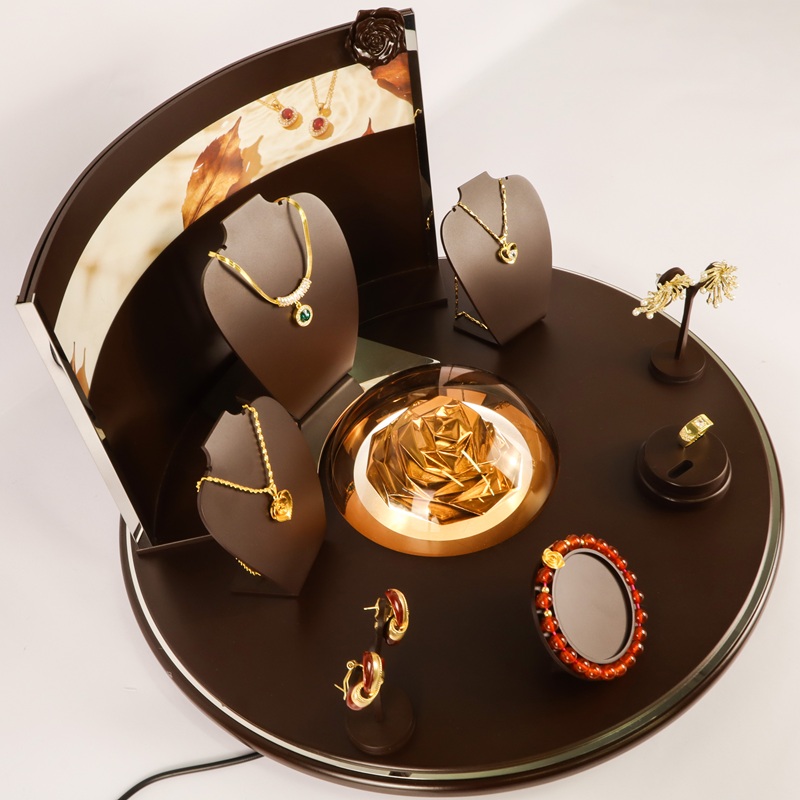
This Brown LED-Lit Round Modular Jewelry Display Stand Set from Kingbee combines focused LED illumination, a reflective mirror background, and modular jewelry holders. The illuminated central area creates a visual focal point, while the surrounding display components provide dedicated positions for necklaces, earrings, rings, and other accessories.
How Can Display Materials Improve Lighting Effects?
Lighting and display materials should be considered together. The surface behind or beneath a diamond can influence reflections, contrast, and the overall visual atmosphere.
Velvet surfaces: Velvet provides a soft, low-reflection background that creates contrast with diamonds and polished metals. Black and deep-colored velvet can make jewelry stand out without introducing strong unwanted reflections.
Acrylic surfaces: Acrylic offers a clean and modern appearance. Transparent or colored acrylic can be used for display structures, back panels, and decorative elements. However, designers should consider surface reflections and avoid placing bright light sources where they may cause distracting glare.
Mirror finishes: Reflective surfaces can create visual depth and make a display look more spacious. They can also help distribute reflected light around the jewelry. Their position should be planned carefully to prevent distracting reflections.
Matte finishes: Matte surfaces reduce excessive reflections and help maintain a balanced background. They are useful when the jewelry itself should remain the main visual focus.
Kingbee offers different materials and surface treatments for custom jewelry presentation, including acrylic, velvet, metal, and other finishes. Retailers can explore the material and finish selection options to understand how different surfaces can support their display concepts.
Common Lighting Problems in Jewelry Display Cases
Some jewelry showcases look attractive in design drawings but produce unsatisfactory results after installation. In many cases, the problem comes from the lighting arrangement rather than the display structure itself.
Excessive brightness: Too much direct light can create uncomfortable glare and make it difficult for customers to examine small details. Adjusting light intensity and beam direction can improve viewing comfort.
Uneven illumination: If one section of a jewelry counter is significantly brighter than another, customers may overlook pieces placed in darker areas. Distributing light sources more evenly helps create a consistent presentation.
Visible reflections: Glass, acrylic, and polished metal can reflect light sources directly into the customer's line of sight. Changing the angle of the light or using suitable anti-glare materials can help reduce this problem.
Inconsistent color temperature: Mixing different LED color temperatures in one display may cause diamonds and gemstones to look inconsistent. Using coordinated lighting specifications helps maintain a more unified appearance.
Heat and UV exposure: Lighting systems should be selected with heat management and UV output in mind, especially when displaying sensitive materials alongside fine jewelry. LED systems are often preferred because they generally produce less radiant heat than traditional halogen lighting, although actual operating temperature and UV output still depend on the specific product.
Before final production, retailers should test the complete lighting arrangement under actual store conditions. This is more reliable than evaluating individual LED components separately.
How to Choose the Right LED Lighting for a Custom Jewelry Showcase
When planning a custom diamond display case, retailers should consider the following factors together rather than selecting lighting based on brightness alone.
Match lighting to the jewelry collection: Diamond rings, colored gemstones, gold necklaces, and pearl jewelry may require different presentation effects. The lighting arrangement should reflect the main products being displayed.
Check LED color temperature and CRI: Request the actual specifications from the lighting supplier. Test the light with representative jewelry pieces to see whether the colors and brightness appear natural.
Plan lighting positions during the design stage: LED strips, spotlights, and illuminated panels should be considered when developing the display structure. Adding lighting after production may limit placement options and increase modification costs.
Consider maintenance and accessibility: Retail displays are used every day. Lighting components should be accessible for inspection and replacement without requiring unnecessary dismantling of the entire display.
Coordinate lighting with the brand identity: A minimalist diamond boutique may prefer clean white lighting and simple materials, while a traditional luxury jewelry store may use warmer tones, velvet surfaces, and decorative lighting features.
For retailers planning a complete custom display project, Kingbee provides custom display design services, including concept development, 3D renderings, and production drawings. This allows lighting requirements, display dimensions, materials, and brand elements to be considered before manufacturing begins.
How Kingbee Integrates Lighting into Jewelry Display Solutions
A successful jewelry showcase needs more than an attractive LED light source. Its structure, display holders, background materials, reflective surfaces, and lighting positions should work together.
Kingbee Fixtures provides jewelry display solutions for retail counters, showrooms, exhibitions, and luxury jewelry stores. Its product range includes modular display sets, velvet jewelry holders, acrylic display structures, and LED-lit presentation systems.
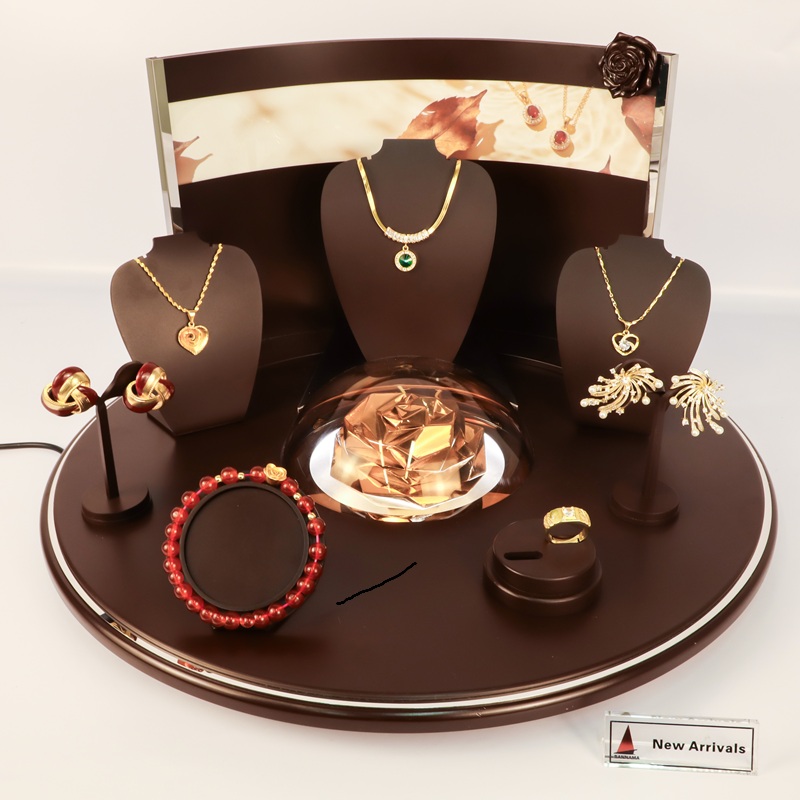
The brown LED-lit modular display shown above combines multiple jewelry presentation areas with a central illuminated feature. Its reflective background adds depth, while the modular arrangement allows different jewelry categories to be displayed together in an organized way.
For retailers who need a coordinated collection of display fixtures, the Kingbee jewelry showcases collection includes different styles and configurations for rings, earrings, necklaces, and other jewelry products.
When developing a new display project, retailers can share their jewelry types, counter dimensions, preferred materials, lighting requirements, and brand design guidelines. These details help the design team develop a display concept that fits the actual retail environment.
Frequently Asked Questions About Jewelry Display Case Lighting
What type of lighting is best for displaying diamonds?
LED lighting is a popular choice for diamond display cases because it offers flexible color temperature options, controllable brightness, and relatively low radiant heat. The best setup depends on the diamond collection, display materials, and retail environment.
What color temperature is suitable for diamond display cases?
Neutral white lighting is a practical starting point for many diamond displays because it offers a balanced visual appearance. Warm and cool lighting can also work depending on the brand atmosphere and jewelry materials. Testing different options with actual diamonds is recommended.
Does higher CRI make diamonds sparkle more?
Not necessarily. A high CRI helps a light source reveal colors more accurately, but diamond sparkle also depends on the stone's cut, light direction, intensity, and viewing angle. CRI should be considered alongside other lighting specifications.
Can LED lights damage diamonds?
Diamonds are highly durable gemstones and are not normally damaged by standard retail LED illumination. However, retailers should still consider heat management and UV exposure for other jewelry components and display materials.
Why do diamonds look different under different jewelry display lights?
Different light sources have different color temperatures, spectral characteristics, brightness levels, and beam directions. These factors change how light interacts with the diamond and how its brilliance, fire, and scintillation appear to customers.
Can lighting be customized for a jewelry display stand?
Yes. Custom jewelry displays can incorporate different LED lighting positions, illuminated bases, lighted back panels, and adjustable lighting configurations. These options can be planned according to the jewelry collection and brand presentation requirements.
Create a Better Diamond Display with the Right Lighting Design
Lighting directly affects how customers see diamonds inside jewelry display cases. Color temperature, CRI, light direction, brightness, and display materials all contribute to the final presentation. A well-planned lighting system highlights the natural characteristics of diamonds while maintaining a comfortable viewing experience.
For jewelry retailers, the most effective approach is to consider lighting as part of the overall display design rather than treating it as a separate accessory. By coordinating LED specifications, display materials, product arrangement, and brand aesthetics from the beginning, retailers can create showcases that are both visually attractive and practical for daily use.
Kingbee Fixtures supports custom jewelry display projects with different materials, modular structures, and lighting options. Whether you are planning a new diamond counter or upgrading an existing jewelry store, the right display design can help present every collection more effectively.
Visit Kingbee Fixtures to explore jewelry display solutions or discuss your custom showcase requirements.