In a luxury watch store, the display does more than hold products. It shapes how customers see a collection, draws attention to individual timepieces, and helps create a consistent brand experience. A well-planned watch display showcase should balance appearance with practical needs such as product visibility, organization, durability, and easy maintenance.
For retailers, watch brands, and commercial interior designers, choosing the right display requires more than selecting an attractive color or material. The layout, lighting, watch holders, storage space, and available customization options all affect how the finished display works in a real retail environment.
This guide explains what to consider when selecting a watch display case for a luxury retail store, from materials and lighting to display capacity and custom design.
1. Start with Your Store Layout and Display Goals
Before choosing a watch display showcase, consider where it will be placed and what it needs to achieve. A countertop display in a compact boutique has different requirements from a large modular presentation used for a new collection launch or a trade show.
For a permanent retail counter, the display should make watches easy to view from the customer’s side while leaving enough room for staff to handle products. A wall-side or window display may need a stronger visual focal point, especially when it is used to introduce a new collection or highlight selected models.
Think about these practical questions before finalizing the design:
- How many watches need to be displayed at one time?
- Will the showcase sit on a countertop, inside a window, or on a dedicated display table?
- Should the design include storage boxes for additional stock or accessories?
- Does the display need space for a logo, campaign image, or product information?
- Will the same design be used across several stores or retail locations?
Answering these questions early helps narrow down the structure and size. It also gives a manufacturer a clearer brief when preparing a custom layout or quotation.
2. Choose Materials That Match Your Brand Positioning
Materials influence the overall look, feel, and maintenance requirements of a watch display case. The right choice depends on the store's interior, the style of the watches, and the budget for the display project.
Acrylic works well for contemporary retail displays because it supports clean lines, varied shapes, and a wide range of finishes. Glossy black acrylic can create a dramatic background for metallic watches, while clear or translucent acrylic can produce a lighter visual effect.
Metal components can add structure and contrast. Aluminum tubes, metal trim, and metallic finishes are useful when the design calls for a modern or technical appearance. They can also be combined with acrylic to create layered display structures.
Wood and wood-look finishes suit stores that want a warmer, more traditional atmosphere. Walnut tones and carefully selected metallic accents can complement classic watch collections or interiors with natural materials.
Flocked or soft-lined surfaces are useful around watch holders and storage compartments. They provide a softer contact surface than a hard, untreated display area and can help reduce surface scratches during normal handling.
Kingbee Fixtures offers watch display options using acrylic, flocked materials, metal, and wood. Explore the watch showcase collection to compare styles and identify a suitable starting point for your project.
3. Plan Lighting Around Watch Details
Lighting can change how a watch looks behind glass or on an open display stand. It affects the visibility of the dial, the appearance of metal bracelets, and the contrast between the watch and its background.
Integrated LED lighting can create a focal point for selected timepieces. It is particularly useful when a store wants to separate a featured model from the rest of the collection. However, adding more light does not automatically improve the presentation. Poorly positioned lights may create reflections on glass, bright spots on polished metal, or distracting shadows.
When reviewing a lighting design, consider:
- Light direction: Position lights to reveal dial details without producing distracting glare.
- Color consistency: Keep the lighting appearance consistent across the display so watches do not look noticeably different from one position to another.
- Background reflection: Mirrored panels can add depth, but their placement should be checked under the store's actual lighting conditions.
- Maintenance access: Ask how lighting components can be accessed if servicing or replacement is required.
For stores that want to emphasize a featured watch, a central illuminated area can create a clear visual hierarchy. Secondary watches can be arranged around it without competing for the same level of attention.
4. Product Example: Silver Gray LED Modular Watch Display
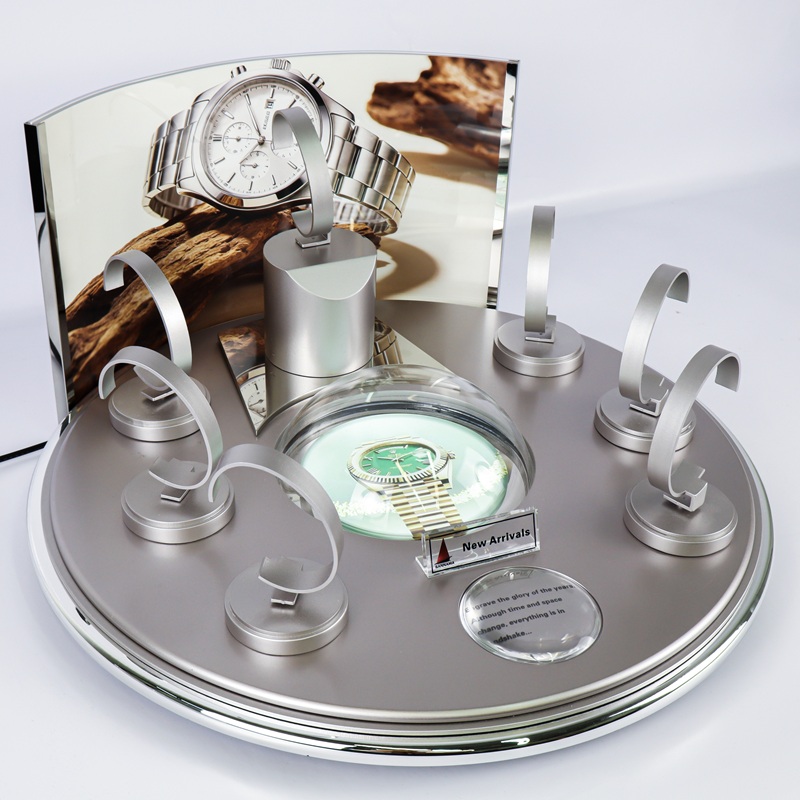
A silver-gray modular watch display can suit boutiques that prefer a contemporary finish and a structured presentation. This design combines C-shaped watch holders, a central LED display area, and a reflective background to create visual depth. Its modular arrangement can also support different presentation layouts for boutiques, exhibitions, and collection launches.
The product page lists acrylic and metal as primary materials and describes customization options for color, holders, the back panel, and LED lighting. These details make it a useful reference when planning a display around a particular brand identity or product collection.
When evaluating a similar design, confirm the number and spacing of watch holders, the dimensions of the display surface, the placement of the lighting, and the space available for branding.
5. Decide How Much Storage the Display Needs
A watch display should look organized during busy retail hours, not just when it is first installed. If staff need to move watches frequently, storage and product access should be considered alongside appearance.
A simple display stand may be sufficient when the purpose is to present a small selection of watches. A larger retail setup may benefit from removable storage boxes, dedicated compartments, or a modular layout that separates featured products from supporting items.
Think about the daily workflow. Can staff retrieve a watch without moving several neighboring products? Are replacement watches and accessories stored in a convenient location? Can the display be rearranged when a new collection arrives?
For high-value collections, also consider the store's broader security arrangements. A presentation stand is not automatically a secure enclosure. If the project requires lockable storage, protective glazing, or integrated security hardware, specify those requirements during the design stage and confirm what the manufacturer can provide.
6. Product Example: Black High-Gloss Acrylic Modular Watch Display
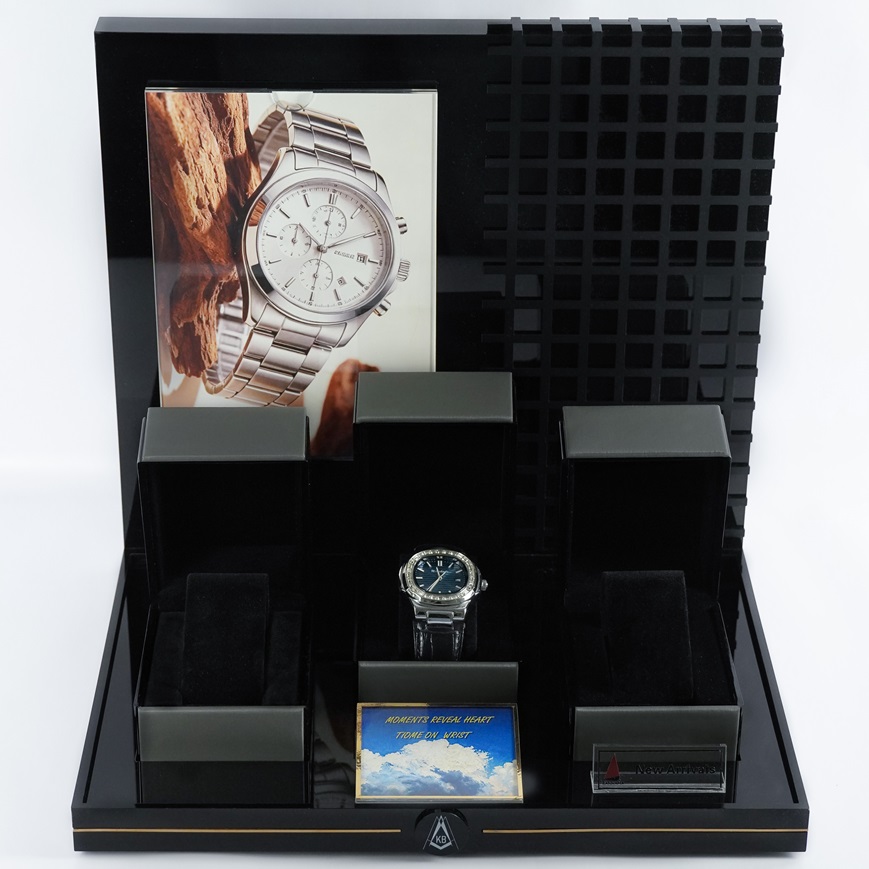
A black high-gloss acrylic display offers a strong contrast for silver, gold-tone, and other metallic watches. The example above combines dedicated watch positions with removable storage boxes, a branding area, and a decorative background grid.
The modular structure can help retailers organize different models while keeping the overall presentation consistent. The product page also describes customization of dimensions, display positions, storage box quantity, and background design.
This type of watch display case may be worth considering for a premium counter, a watch and jewelry retail space, or an exhibition where the display needs to combine product presentation with brand graphics. Before ordering, confirm the finish, holder layout, storage configuration, and required quantity with the supplier.
7. Consider Customization for a Consistent Brand Experience
Standard display products can be a practical choice when the dimensions and appearance already fit the store. A custom watch showcase is worth considering when a brand needs specific measurements, a distinctive shape, a particular finish, or a coordinated look across several retail locations.
Customization may involve more than changing the color. Depending on the design, it can include:
- Overall dimensions and the number of watch display positions.
- Holder shapes and spacing for different watch sizes.
- Acrylic, metal, wood, or combined material selections.
- Matte, glossy, metallic, or other approved surface finishes.
- LED lighting and the positioning of illuminated features.
- Logo printing, branded background panels, or promotional graphics.
- Removable storage modules and alternative display arrangements.
For multi-store projects, ask the supplier to document the approved dimensions, colors, materials, and artwork. A confirmed specification makes it easier to keep displays consistent when the project expands or replacement units are needed.
Kingbee Fixtures provides consultation and 3D design support for retail display projects. You can learn more about the company's services on Kingbee Fixtures before discussing your requirements with its team.
8. Check Production, Packaging and Delivery Before Ordering
The display itself is only one part of an export project. Buyers should also understand how the product will be approved, produced, packed, and delivered.
Before confirming an order, prepare a clear brief that includes the intended use, dimensions, quantity, preferred materials, finish references, branding files, and delivery destination. If the display has lighting or detachable modules, request details about assembly and power requirements where applicable.
It is also sensible to confirm whether a sample or prototype is available, how changes are handled after design approval, and what packaging is planned to protect acrylic panels, metal parts, and finished surfaces during transit. For projects involving multiple stores, ask whether the supplier can label or organize shipments according to the final delivery plan.
A detailed brief reduces avoidable revisions and helps both sides evaluate the same requirements before production begins.
9. Product Example: Luxury Stepped Aluminum Tube Lighted Watch Display
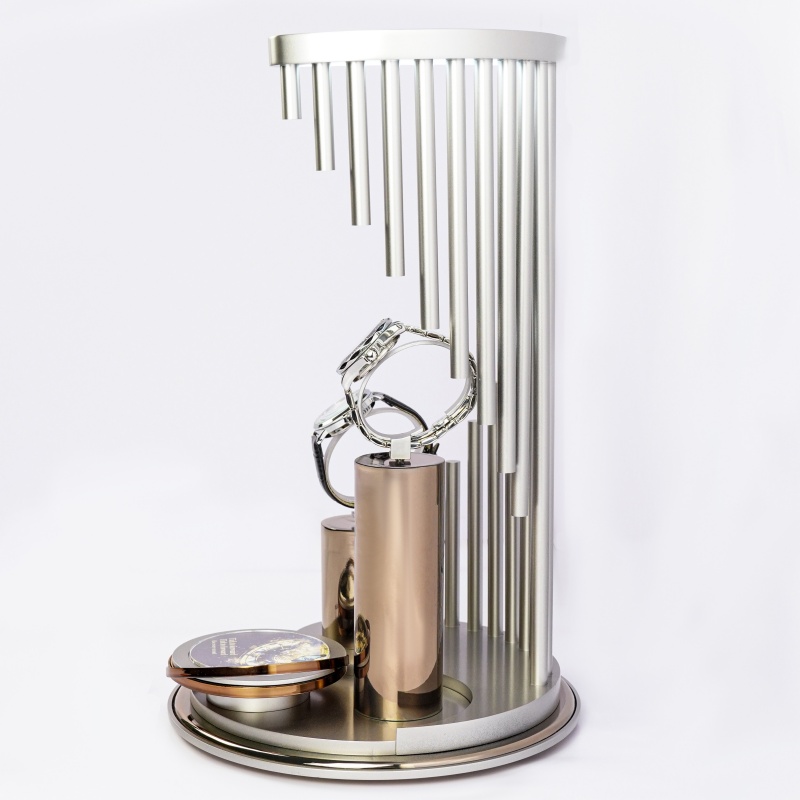
A stepped aluminum tube display introduces height variation and a more sculptural look. This style can help create visual separation between featured products and surrounding displays, making it useful for boutique counters, promotional presentations, and exhibition settings.
When considering a stepped structure, check that the height differences do not obstruct sightlines and that each watch remains easy to view. Confirm the finish and arrangement against the store's interior materials, especially if the display will be placed alongside other fixtures.
Frequently Asked Questions
What is the difference between a watch display showcase and a watch display case?
A watch display showcase is a broad term for retail presentation systems, including open stands, countertop displays, and modular arrangements. A watch display case often refers to an enclosed cabinet or a defined display unit. The exact meaning depends on the product design and how it is used.
Which material is best for a luxury watch display?
There is no single best material for every store. Acrylic supports modern shapes and finishes, metal adds structure and contrast, and wood or wood-look surfaces create a warmer appearance. The right choice depends on the brand's visual identity, budget, and maintenance needs.
Can a custom watch showcase include a logo and LED lighting?
Many custom display designs can incorporate branding panels and integrated lighting. Available options depend on the chosen structure and specifications, so confirm logo placement, lighting configuration, dimensions, and artwork with the manufacturer before production.
How do I choose the right display capacity?
Start with the number of watches that need to be presented at one time, then allow enough space for each watch to remain clearly visible. Consider whether featured models need more space and whether staff require additional storage for replacement stock.
What information should I provide when requesting a quotation?
Provide approximate dimensions, order quantity, preferred materials and finishes, the number of watch positions, lighting requirements, branding artwork, and the delivery destination. Reference images or a design drawing can help the supplier understand the expected result.
Choose a Watch Display for Your Retail Project
The right watch display showcase should fit the store's layout, complement the watches, and support daily retail operations. Material selection, lighting, holder design, storage, and customization all deserve attention before an order is placed.
Whether you are planning a single boutique counter, a new collection launch, or a multi-store rollout, prepare your requirements before comparing designs. Kingbee Fixtures can help you explore display options and discuss a solution that suits your retail project.