A premium watch showcase takes shape when a well-specified LED Watch Display Stand Set works alongside a High end watch circular display stand. Light, layout, and material choices then build around these two anchors. Retail designers, brand managers, and display professionals share one goal here: Premium Watch Showcases that raise perceived value and keep each timepiece protected. kingbee supplies the LED display stands and circular displays at the center of this approach, and its team supports every stage from first concept to final installation. The result is a display that sells the watch before a customer ever touches it.
Key Takeaways
-
Use soft, diffused LED light to make watches look their best and protect them from heat and glare.
-
Choose materials and lighting that match the watch's metal and style for a high-end look.
-
Plan the layout and proportions of your showcase to guide customers' eyes to the watches.
-
Follow technical specs for LED color rendering and adjustable stands to fit different watch sizes.
-
Refresh your showcase regularly to keep it looking sharp and protect your investment.
Role of LED Stands and Circular Displays
Why LED Watch Display Stand Sets Matter
An LED Watch Display Stand Set does the heaviest lifting in any Premium Watch Showcases layout. Watches carry sapphire crystals, polished steel, and mirrored dials that throw reflections back at the viewer. Soft, diffused LED light spreads evenly across a tray and removes those hotspots. YABO Display notes that a slightly warm-neutral 3500K to 4000K temperature reads best against leather straps and metal bracelets alike.
The table below summarizes the core benefits that YABO Display attributes to soft-light LED fixtures in watch showcases.
|
Benefit |
Details |
|---|---|
|
Even, low-glare illumination |
Diffused linear fixtures and wide floods light a full tray without hotspots |
|
Low heat output |
LED products emit very little infrared heat, so case temperature stays near room level through a long trading day |
|
Flicker-free, UV/IR-free output |
Protects gemstones, textiles, and printed signage from fading and prevents camera rolling bands |
|
Beam control |
Narrow spots of 10 to 24 degrees create crisp highlights; floods of 36 to 60 degrees cover a shelf |
|
Tunable output |
Dimmable and tunable-white fixtures adapt to peak traffic and private appointments |
kingbee builds these principles into every stand set, so each watch shows its true color under moderate, controlled brightness.
What High End Watch Circular Display Stands Add
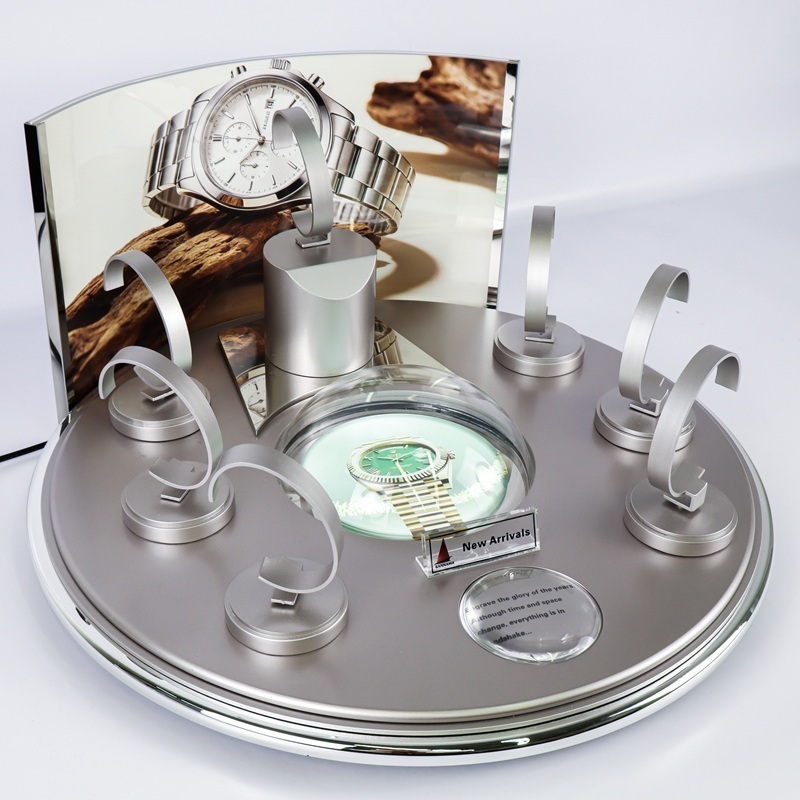
A High end watch circular display stand turns a static tray into a focal point. A large custom round LED screen can anchor a Premium Watch Showcases wall and draw foot traffic from across a store. Rotating platforms and wrist-mimicking holders then present each timepiece at its best angle.
Huaxin Display describes the category through several design levers:
-
Premium materials such as polished stainless steel, brushed titanium, tempered glass, and clear or frosted acrylic
-
Circular shapes that complement round watches, with angular frames reserved for modern timepieces
-
Dimmable LED strips and brand-colored backlighting that reinforce identity
-
Modular, stackable, and height-adjustable designs that grow with a collection
-
360-degree rotating platforms that show case shape, bracelet, and dial from every side
"Presentation is paramount in the luxury watch sector," said a spokesperson for Huaxin Display. "Our new Premium Wrist Watch Display Stands are more than just fixtures; they are strategic tools designed to create an atmosphere of exclusivity and desirability."
kingbee pairs these circular displays with its LED stand sets, giving retailers one coordinated system instead of two separate fixtures.
Premium Design Principles
Light, Contrast, and Materials
Structure, color, and material must work as one system. Sunzen Display advises designers to coordinate every visible material as a single display system. Metal frames, wood structures, and decorative finishes establish the visible form. Fabric, microfiber, leather-effect surfaces, and stone then shape contrast, texture, and perceived product quality. A stand that looks expensive but clashes with its surroundings weakens the watch on it.
Texture and contrast carry unusual weight in watch presentation. Quill and Pad observes that most wristwatch design follows similar, predictable paths, so color and texture become a designer's bread and butter. The same logic applies to the fixture. A brushed steel riser against dark velvet creates depth. A polished frame beside a matte base separates the watch from its support. PVD and CVD coatings measure mere microns in thickness, so they change hue without adding surface texture. Real texture comes from finishing before coating, and display designers should treat stand finishes the same way.
Lighting temperature should match the metal on display. Samtop's jewelry lighting guidance pairs gold with warm white light of 2700–3500K, silver with 4000–4500K, and diamonds with cool white light of 5000–6500K. The same source recommends CRI 90+ LEDs for accurate color rendering and diffusers or honeycomb grids to control glare. Samtop also states that lighting accounts for 70% of jewelry attractiveness, which makes fixture specification a primary decision rather than an afterthought.
Watch pillows and angled stands position dials toward the customer's eye. Focused LED strips then graze the case flank and bracelet links, and that raking light reveals finishing detail. Branded fabric displays complete the picture inside a cohesive retail booth design. kingbee builds these material and lighting layers into its stand sets so each Premium Watch Showcases concept reads as one composition.
Proportion, Sightlines, and Space
Proportion decides whether a customer sees the watch or the cabinet. Sundo Company warns that even the most expensive wall showcase can perform poorly when its proportions are wrong for real shopping behavior. Depth is the first tradeoff. A shallow case limits tray format and layered display. An overly deep case pushes the circulation path inward and makes the store feel narrower. Height is the second. Hero product should sit where a customer can read it quickly, while upper zones carry branding or lighter presentation elements.
Sightlines guide the eye through the room. A showcase should help the eye travel through the store rather than interrupt it with random module breaks, mismatched heights, or reflective surfaces that fight the lighting. Sunzen Display adds that showcase positions should respond to the complete retail environment, including entrances, circulation, wall zones, and staff access. The goal is not expensive-looking materials for their own sake. Proportion, texture, reflectivity, and finish should stay controlled so the watch remains the visual focus.
Technical Specifications
LED Lighting Specs
Color rendering decides whether a dial reads true. Retail lighting guidance sets a color rendering index above 95 as the baseline for high end display, and the R9 metric matters just as much. R9 measures deep red tones, which drive natural skin tones, rich leather straps, and fine mahogany accents. A color temperature of 4500K to 5000K suits diamonds and fine watches, because it produces maximum brilliance and crisp reflections. kingbee builds these targets into each LED Watch Display Stand Set so a blue dial stays blue and a rose gold case stays warm.
Optics and thermal design protect both the watch and the fixture. Frosted or silicone diffusers eliminate visible LED hot spots and harsh glare, and precise beam angle selection focuses light on the merchandise without spilling into the shopper's line of sight. Aluminum heat sinks pull heat away from sealed display compartments, which protects inventory and extends LED lifespan. Smart controls such as 0 to 10V or DALI dimming, motion sensors, and tunable white technology let staff shift output between peak traffic and private appointments. Designers should confirm brightness on a physical mock-up before finalizing the specification.
Circular Display Mechanics
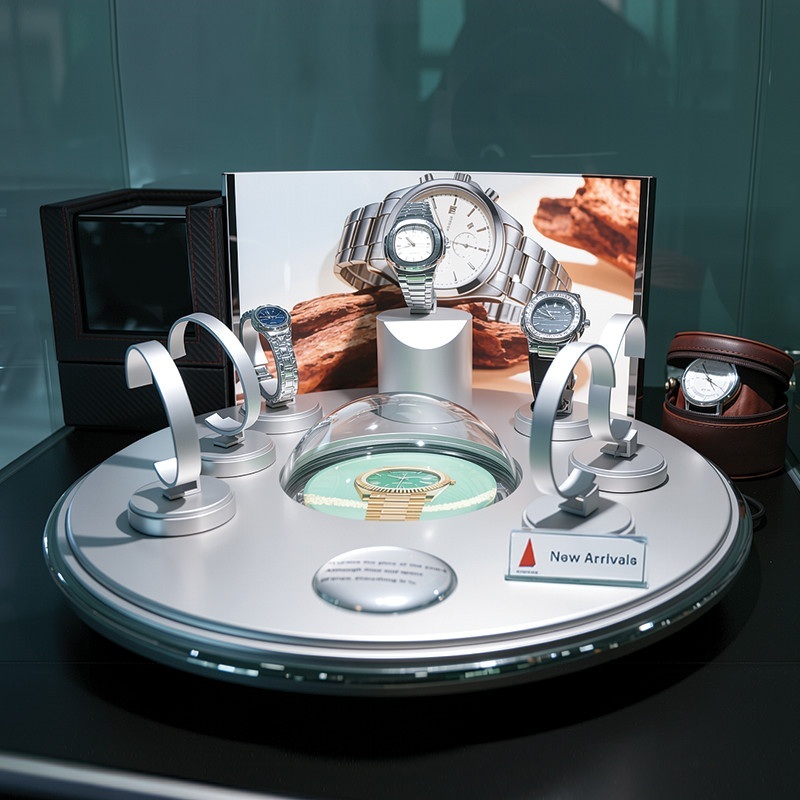
Adjustable watch display stands fit different watch sizes without a custom fixture for every piece. Sliding or interchangeable holders grip a slim dress watch and a chunky chronograph with equal security, and adjustable height or tilt lets a designer raise a hero piece above its neighbors. That flexibility elevates visual appeal and strengthens retail storytelling, because one High end watch circular display stand can carry a rotating seasonal story instead of a fixed assortment.
Rotation and holder mechanics complete the system. A 360-degree rotating platform shows case shape, bracelet, and dial from every side, and wrist-mimicking holders angle each watch the way a customer would wear it. Motorized turntables run quietly enough for a sales conversation, and cable routing through the base keeps the display clean. kingbee engineers these mechanics alongside the lighting so the two systems share one power path and one service routine.
Integration, Layout, and Constraints
Combining Stands and Circular Displays
Layout work starts before anyone selects a fixture. Designers should first record booth dimensions, event requirements, and commercial goals. Those three inputs set the footprint, the traffic path, and the number of hero positions. Only then does it make sense to map stands and circular displays onto the plan.
RT Display recommends low-profile, LED-lit glass cases for unobstructed views. Angled podiums and turntables create hero moments in several spots around the store. Brand feature walls carry hero collections under accent lighting. Counter displays and islands maximize space efficiency, and curved glass cases invite browsing while lower-profile units keep sightlines clear across the floor. A kingbee LED Watch Display Stand Set fits these zones as a modular layer, so staff can reconfigure a seasonal story without rebuilding the case.
Compliance, Power, and Cost
Power planning deserves early attention. Sunzen Display notes that motorized configurations require electrical access, cable routing, operating controls, and maintenance access during engineering. Designers should reserve a service route behind each rotating unit and confirm that concealed LED illumination shares one safe power path with the turntable.
Safety compliance and budget follow the same logic. Tempered glass tops and secure locking mechanisms protect high-value inventory, per RT Display, and those choices belong in the specification rather than the final review. Budget planning should cover fixtures, controls, installation, and a refresh allowance. A staged rollout protects cash flow and keeps each Premium Watch Showcases zone consistent as the collection grows.
Building Premium Watch Showcases Step by Step
From Brief to Prototype
A disciplined build starts with a written brief. The brief should record the watch assortment, the number of hero positions, the booth or counter footprint, the event calendar, and the target customer. kingbee reviews that brief with the brand team and translates it into a fixture schedule. The schedule lists each LED Watch Display Stand Set, each High end watch circular display stand, and the power and service access each unit needs.
The process then moves through five stages:
-
Brief review and fixture schedule sign-off.
-
Concept sketches that map stands, circular displays, and sightlines onto the floor plan.
-
A physical prototype of one hero zone, built with the final materials and lighting.
-
Lighting and rotation testing on the prototype with real watches in place.
-
Production, delivery, and installation.
The prototype stage matters most. Designers should place actual timepieces on the mock-up and check dial legibility, glare, and rotation speed under store lighting. kingbee builds prototype units so brands can approve the look before committing to a full rollout.
Display stands should also match the watch type. A slim dress watch suits a low angled pillow under a narrow beam. A dive watch or chronograph benefits from a wrist-mimicking holder that shows case depth and bracelet articulation. Limited editions deserve the circular display as a solo stage. This matching keeps retail and trade show displays eye-catching without crowding the assortment.
Installation and Refresh Cycles
Installation follows a fixed sequence. The crew confirms power drops and cable routes first, then sets the base units, then mounts the circular displays, and finally commissions the lighting. Testing comes next. Staff should run every turntable through a full rotation, dim the LEDs through their range, and confirm that no fixture casts a hotspot on a neighboring tray. kingbee supplies commissioning checklists with each order so store teams can verify these points on site.
Premium Watch Showcases age quickly without a refresh plan. Brands should schedule a seasonal review that covers lamp output, fabric condition, and holder wear. LED output declines gradually, so a light meter check at each review catches dimming before customers notice it. Fabric pillows and branded backdrops should rotate with each collection launch. Mechanical parts such as turntable bearings deserve an annual service check.
kingbee supports this cycle with replacement holders, spare diffusers, and updated fabric sets. A planned refresh keeps every zone consistent and protects the investment across years of trade shows and retail seasons.
Premium results come from treating the LED Watch Display Stand Set and the High end watch circular display stand as one integrated system. Light, proportion, and layout discipline govern that system. Designers who lock in the design principles, technical specifications, integration, compliance, and cost decisions early avoid costly rework later. The step-by-step process then carries the concept from brief to prototype to installation with confidence.
A showcase never stays finished. Seasonal reviews of lamp output, fabric condition, and holder wear keep every Premium Watch Showcases zone sharp across years of retail seasons and trade shows. kingbee supports that long view with coordinated stands, circular displays, and replacement parts, and its team stands ready to execute the next refresh.
FAQ
What lighting temperature suits a Premium Watch Showcases display?
Match the light to the metal. The article pairs gold with warm white light of 2700–3500K, silver with 4000–4500K, and diamonds with cool white light of 5000–6500K. A neutral 3500–4000K range reads well against leather straps and metal bracelets. kingbee builds these targets into each LED Watch Display Stand Set.
How large should a High end watch circular display stand be?
Size follows the hero position, not the other way around. A large custom round LED screen can anchor a showcase wall and pull foot traffic. Smaller rotating platforms suit counter zones. kingbee helps brands match screen size to the booth footprint and sightlines.
Do adjustable stands fit every watch size?
Adjustable watch display stands fit different watch sizes without a custom fixture for each piece. Sliding or interchangeable holders grip a slim dress watch and a chunky chronograph with equal security. Adjustable height or tilt lets a designer raise a hero piece above its neighbors. kingbee supplies these holders as standard components.
What should power and compliance planning cover?
Plan power early. Motorized configurations need electrical access, cable routing, operating controls, and maintenance access. Designers should reserve a service route behind each rotating unit. Tempered glass tops and locking mechanisms protect inventory. Budget planning should cover fixtures, controls, installation, and a refresh allowance. kingbee reviews these points during the brief stage.
How often should a showcase be refreshed?
Schedule a seasonal review covering lamp output, fabric condition, and holder wear. LED output declines gradually, so a light meter check catches dimming before customers notice. Rotate fabric pillows and backdrops with each collection launch. Service turntable bearings annually. kingbee supports this cycle with replacement holders, spare diffusers, and updated fabric sets.