Your display case is the silent salesperson. It greets every customer before a staff member does, and it speaks for the jewelry inside long before anyone asks a price.
You likely feel the tension already. You want a showcase that looks luxurious. You also need it to organize inventory, protect delicate pieces, and quietly close sales. Can one setup truly do all three?
It can, and the answer starts with a clear framework. You will define brand criteria first, weigh materials, lighting, layout, and security next, then match display types to categories and arrange everything with intent. Choosing jewelry showcases display sets becomes a sequence of confident decisions, not guesswork.
Key Takeaways
-
Define your brand's look first. This guides every display choice.
-
Choose materials that match your brand and last long. Plan lighting and security carefully.
-
Match display types to jewelry categories. Use busts for necklaces and trays for rings.
-
Arrange displays with height and grouping. Create a focal point to draw customers.
-
Rotate displays regularly. Keep the look fresh to encourage repeat visits.
Choose Jewelry Showcases Display Sets by Brand and Audience
Define Your Signature Look
Your brand identity should drive every display decision. Treat each fixture as a visual extension of your core values. A heritage jeweler might blend traditional craftsmanship with modern lines for a timeless feel, while a contemporary label leans into clean geometry. Luxury or one-of-a-kind pieces call for a premium, high-end aesthetic. Marble, glass, metal, and certified wood elevate that look, and restrained detailing lets the jewelry lead. Fashion-focused stores can lean brighter and more playful, and that energy suits trend-driven assortments well. Both directions work when they match the audience you serve.
Color carries emotional weight. Red signals excitement, blue builds trust, green calms, and black projects elegance. Choose display backgrounds that contrast with your jewelry colors so each piece stands out. A consistent color palette across counters and wall units then creates a cohesive look. Kingbee offers coordinated display sets you can evaluate against these criteria, which simplifies the search for a unified family of fixtures.
Set Practical Selection Criteria
Turn your aesthetic into a checklist before you compare options. Control excess through proportion, reflection, and precise material transitions rather than expensive materials alone. Slim glass structures and disciplined detailing make fixtures feel lighter and more architectural. Decorative elements should frame the jewelry instead of competing with it. Clean glass edges, tidy metal joints, and smooth material transitions signal refinement to every customer who peers into the case.
Consistency and hierarchy complete the criteria. Counters, wall displays, and showcases should share one material language so the store reads as a single design family. Give hero pieces isolated presentation and controlled illumination, group collections together, and reserve bridal or consultation zones for assisted selling. Integrated, concealed lighting reveals facets and metal surfaces evenly across fixtures. Apply these standards to every jewelry showcases display sets option you shortlist, and your selection becomes objective rather than emotional.
Weigh Materials, Lighting, Layout, and Security
Pick Quality Materials and Finishes
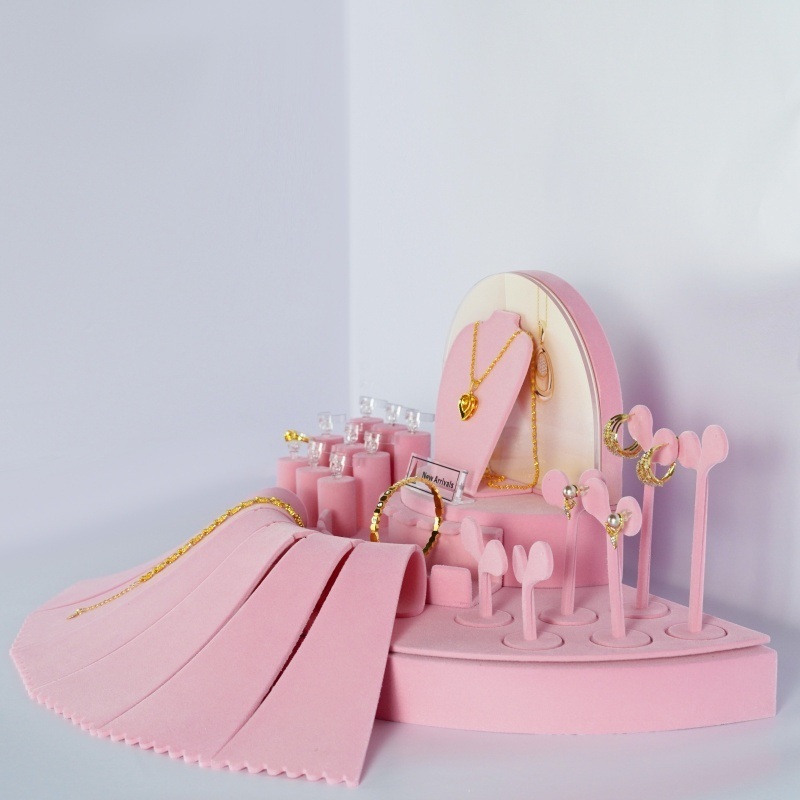
Material choice shapes both durability and perceived value. Wood brings a classic, warm look and pairs well with gemstone jewelry. Acrylic delivers clean modern lines with a smooth, reflective surface that is easy to maintain. Velvet radiates a soft premium feel and suits high-end brands, though it needs care to avoid crushing and dust. Glass adds visual engagement, metal reads contemporary, and marble signals sophistication for luxury-focused assortments. Match each material to your brand story, then confirm it holds up to daily handling.
|
Material |
Aesthetic Effect |
Durability and Maintenance |
|---|---|---|
|
Velvet |
Luxury and sophistication |
Requires care to avoid crushing and dust |
|
Acrylic |
Modern, sleek, minimalist |
Smooth, reflective, easy to maintain |
|
Wood |
Earthy and natural |
Durable, suits rustic themes |
|
Glass |
Visually engaging and reflective |
Fragile; best mixed with wood or metal |
|
Metal |
Contemporary and industrial |
Sleek and durable |
Finish consistency matters as much as material choice. Stands should share one finish, such as matte black, white, or natural wood, so the case reads as a single family. Kingbee display sets help you hold that consistency across counters and wall units.
Plan Lighting, Case Style, and Loss Prevention
Lighting does more than illuminate. A layered strategy sells. Ambient lighting establishes an inviting, upscale backdrop. Task lighting provides crisp visibility at consultation and checkout areas. Accent lighting creates the sparkle that draws customers toward displays. Specular track fixtures on premium pieces near the entrance produce eye-catching reflections that pull shoppers in from across the store. Warm ambient paired with cooler accent lighting builds a luxurious feel. Angle track heads carefully to avoid glass reflections, so customers see the jewelry rather than the light source. Narrow-beam accents on affordable items near the register encourage last-minute purchases, and dimmable fixtures keep sparkle enhanced without overwhelming shoppers.
Case style follows your floor plan. Full-view cases double as a counter and invite close inspection. Half-view cases add storage cabinets underneath, which keeps backup inventory within reach. Wall cases maximize sales space and suit smaller footprints. Choose the style that fits your traffic flow, then confirm the glass structure supports your lighting plan.
Security belongs in the design, not on top of it. Specify tempered glass, anti-theft locks, reinforced cabinet structures, hidden drawers, and secure display trays. Sturdy, tamper-resistant locks should let staff operate them easily while blocking unauthorized access. Modern cases may use plunger locks, sliding door locks, or electronic systems. Integrate these features so the case stays clean and elegant rather than heavy. Evaluate every jewelry showcases display sets option against these four dimensions, and your showcase will protect inventory while still selling it.
Match Jewelry Display Types to Categories
Rings, Earrings, and Necklaces
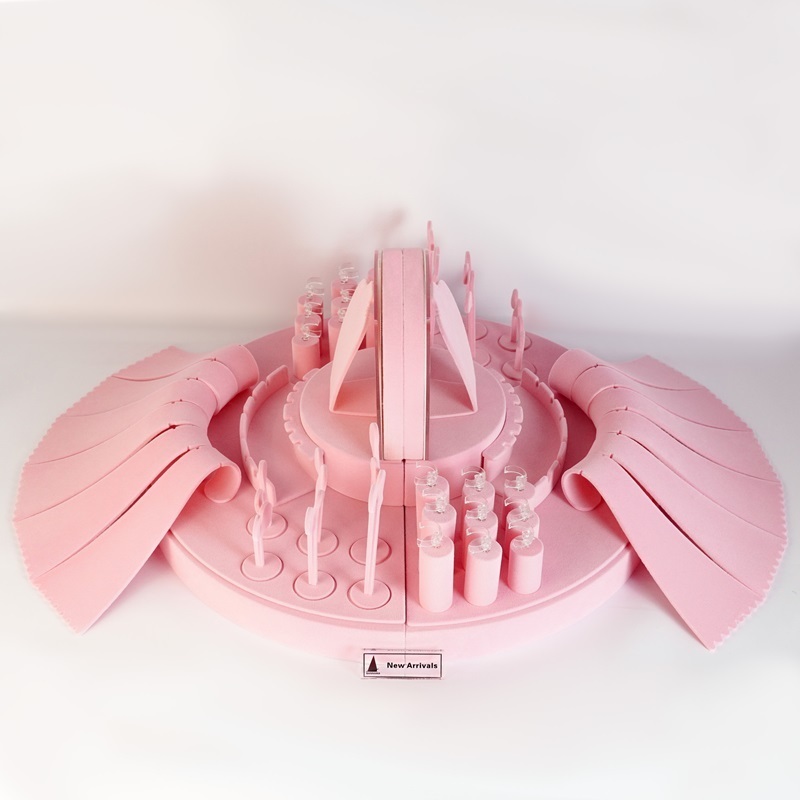
Each category has a natural display logic, and matching the fixture to the piece protects both visibility and condition. Necklaces drape best on bust stands that mimic natural wear. Vary bust heights and sizes to build depth, and use neutral cream or black tones so the metal and stones carry the color. Tiered displays separate short from long necklaces and prevent tangling. Spotlight a statement necklace at eye level with focused lighting and a supporting prop.
Earrings reward full visibility. Hanging racks and hooks, including transparent acrylic styles, let customers see the complete design and try pieces on with ease. Carded earrings on rotating racks or grids work well when you organize them by studs, hoops, and drops. Group earring sets together on small stands with gift signage to suggest value.
Rings need order and a soft surface. Velvet-lined ring trays hold bulk inventory arranged by size, style, and material. Feature rings deserve a pedestal and a spotlight, and you should rotate the featured item regularly. Organize by metal, such as gold, silver, or rose gold, and add signage by gemstone.
A jewelry display stand can showcase necklaces, bracelets, rings, and other accessories while keeping the retail space organized. Choose a velvet jewelry counter display stand set when your assortment centers on fine pieces, because the soft surface and premium feel suit high-value inventory. A Pink Flocked Acrylic Jewelry Display Sets option fits fashion-forward assortments, where brighter tones and playful energy match trend-driven shoppers. Both directions serve different needs well.
Bracelets, Watches, and Statement Pieces
Bracelets display cleanly on T-bar stands at varying heights, and you should avoid overcrowding the bar. Rotating displays near entrances or checkout, paired with a mirror, encourage try-on. Stack complementary bracelets and cuffs to inspire mix-and-match, and give standalone cuffs their own separate display.
Watches call for drama and variation. Watch and bangle pillows add softness, and upright stands give timepieces a more sculptural presentation. Clear the first few inches of the case to reduce clutter and pull the eye toward featured pieces. Group matching display elements at varying heights, with taller groups toward the back to preserve white space. Move curved elements to the case edges, where the curve follows natural eye movement and leads viewers to the next display.
Statement pieces benefit from isolation. A single ring stand spotlights a bold ring better than a crowded tray, and an earring tree lets dangling earrings hang at varied heights. Contrasting backdrops sharpen the effect: gold pops on black velvet, and silver shines against deep navy. Risers and bases add vertical depth for a layered, professional look. Kingbee display sets let you build this hierarchy across a full case, and the best jewelry showcases display sets give every category a fixture designed for its shape.
Build Visual Impact Through Arrangement
Use Height, Grouping, and Props
Height creates hierarchy inside the case. Place tall busts at the back for statement pieces. Set mid-height T-bars in the middle for pendants and medium chains. Keep low risers and pads at the front for entry-level items. This layered depth builds a focal triangle: a dominant hero, a secondary group, and a low invitation to inspect. A flat case reads as discount retail, and layered vertical depth reads as luxury.
Grouping turns inventory into a collection. Choose one primary principle per case, such as metal type, price point, occasion, or chain length. Mixing several principles in one area creates uncertainty about whether items are meant to be compared. Leave clear space on either side of each chain or pendant, because crowding signals low value. Add relevant props to enhance storytelling, such as a silk scarf beneath a pendant or a travel-themed backdrop for a resort line. Props should support the jewelry, never compete with it.
Merchandise by Collection and Rotate
Displaying jewelry by collection remains a popular and effective merchandising choice. A matching parure of necklace, earrings, brooch, and bracelet tells a complete story and invites a multi-piece purchase. Group related items within arm's reach so associates can build add-on recommendations easily during a selling conversation.
Refresh displays on a regular cadence to encourage repeat visits. Move older pieces to secondary locations and give new arrivals prominent placement. Swap base colors, rotate hero items, or adjust height elements to trigger renewed interest without a full reset. Seasonal setups and limited-time features create urgency and give customers a reason to return. Kingbee jewelry showcases display sets make these rotations simple, because coordinated components let you rearrange a case quickly while keeping one consistent look.
Start with your brand criteria, then weigh materials, lighting, layout, and security. Match display types to each jewelry category next, and finish with a deliberate arrangement. Elegance and effectiveness are not opposites. The right jewelry showcases display sets deliver both, and your case can look luxurious while it organizes, protects, and sells.
Test the approach before you commit store-wide. Audit a single case with a Kingbee display set, judge the result against your checklist, then expand with confidence. Browse Kingbee's display set collections or request a consultation to build a coordinated showcase.
FAQ
How many display sets do I need for one case?
Plan one coordinated set per case zone rather than per shelf. A full-view counter typically needs a riser layer, category stands, and pads. Audit a single case first, then scale the same components across your floor.
Can I mix materials across different cases?
Yes, provided you keep one finish language. Pair wood counters with wood wall units, or carry matte black metal throughout. Mixed materials work when the finish repeats. Random finishes make a store read as separate shops.
How often should I rotate a display?
Refresh hero pieces and props monthly, and rotate seasonal features each quarter. Move older inventory to secondary spots and give new arrivals the focal triangle. Regular change encourages repeat visits without a full reset.
What matters most for high-value pieces?
Contrast, isolation, and security. Set fine jewelry against a dark velvet or navy backdrop, give hero pieces their own stand, and specify tempered glass with tamper-resistant locks. Kingbee display sets let you build that hierarchy consistently.
Do fashion assortments need different fixtures?
They benefit from brighter tones and playful shapes, such as pink flocked acrylic. Fine jewelry suits velvet and restrained finishes. Both directions work when the fixture matches the shopper. Choose the aesthetic your audience expects, then hold it consistent.